What a confinement centre stay actually looks like, day by day
By Janice · Updated 2026-05-21
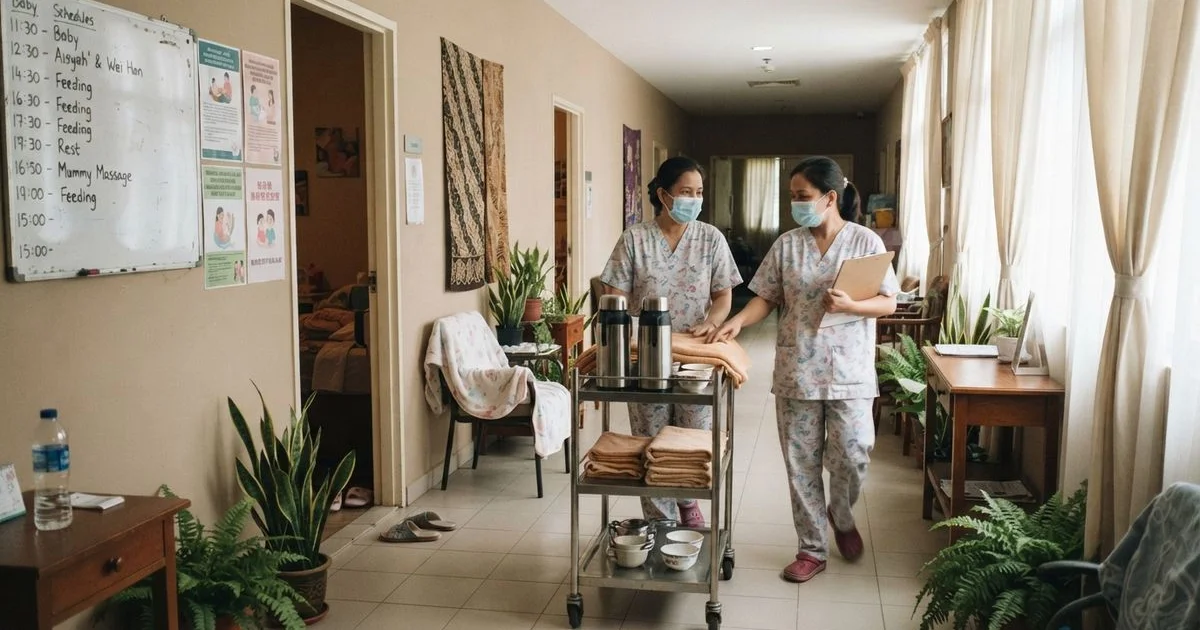
Knowing what happens on an average day helps far more than a glossy brochure when you are deciding where to book. Here is what a stay at a confinement centre in Kuala Lumpur typically involves, from check-in to the day you head home.
A typical daily rhythm
Most centres run on a structured schedule built around rest, feeding, and recovery meals:
- Morning: vital signs check for you, a nurse visit to assess the baby, and the first of several small confinement meals for the day.
- Mid-morning to afternoon: rest periods, feeding or pumping sessions, and often a short baby care lesson (bathing, swaddling, cord care).
- Afternoon: another meal, visiting hours in many centres, and time with your baby if they are kept in a shared nursery overnight.
- Evening: dinner, a final nurse check, and settling in for the night, with staff on call for feeds or concerns.
Meals are spaced through the day rather than served as three large ones, since traditional confinement diets favor smaller, more frequent servings built around specific postpartum ingredients.
Who you will actually interact with
A confinement centre stay is not just a hotel room with meals delivered. Expect regular contact with a small team:
| Role | What they typically do |
|---|---|
| Confinement nurse or caregiver | Daily checks on you and baby, feeding support, bathing demonstrations |
| Kitchen staff | Prepares confinement-specific meals and can usually accommodate dietary notes given in advance |
| Lactation consultant | Included sessions plus paid add-ons if you need more support |
| Centre manager or coordinator | Handles admin, billing questions, and any issues that come up during the stay |

How the stay changes week to week
The first few days after arrival focus almost entirely on physical recovery: rest, wound or incision care if relevant, and getting a feeding routine started. By the second week, most centres shift toward active teaching, showing you how to bathe, burp, and settle the baby, along with guidance on your own postpartum diet and light movement. In the final week, many centres deliberately step back a little, encouraging you to handle more of the baby’s care yourself with staff nearby, so the transition home feels less abrupt.
Reviewers of centres in Kuala Lumpur consistently mention attentive nursing support, patient hands-on teaching, and generous, home-style meals as what stands out during a stay. On the other side, the most common frustrations are slow responses to phone or message inquiries before booking and services that were promised at sign-up but not fully delivered during the stay, so it is worth confirming exactly what is included in writing rather than relying on a verbal promise.
Check-in and check-out logistics
Most centres arrange for you to move in directly from the hospital shortly after delivery, sometimes with transport included in the package and sometimes arranged separately, so confirm which applies before your due date arrives. On the day itself, expect an orientation covering the daily schedule, meal timing, and how to reach staff overnight, followed by an initial assessment of you and the baby. Check-out at the end of the stay typically includes a final review with a nurse, a summary of the baby’s feeding and weight progress, and guidance on what to keep doing once you are home on your own.
Questions worth asking before you book
- What is the nurse-to-mother ratio during the day and overnight?
- Is the baby roomed in with me or kept in a shared nursery?
- How many lactation consultations are included, and what does an extra session cost?
- What happens if I need to extend my stay by a few days?
- Can I see the actual room and nursery before signing, not just photos?
A day-by-day picture like this will not match every centre exactly, since routines vary by provider, but it gives you a realistic baseline to compare quotes and tours against. For what to check on cleanliness, food and genuine rest once you start touring centres, see staying safe during confinement. For how this site evaluates providers, see the scoring methodology, and browse the full directory to compare options across the city.
FAQ
- What does a typical day look like at a confinement centre?
- A day usually includes several small meals, scheduled rest blocks, nurse check-ins for you and the baby, a feeding and pumping routine, and short windows for visitors. Most centres run on a fairly fixed daily rhythm to protect your rest.
- How much contact do I have with my baby during the stay?
- This depends on the centre's model. Some keep the baby in a shared nursery overnight and bring them to you for feeds, others room you in together most of the day. Ask about this specifically before booking if it matters to you.
- Can my partner or other children visit during the stay?
- Most centres allow visits within set hours, often with limits on the number of visitors and sometimes on young children, to reduce infection risk in the nursery. Confirm the visiting policy in advance.
- Does the routine change as the weeks go on?
- Yes. The first week focuses on recovery and establishing feeding, the middle weeks add more hands-on baby care teaching, and the final week usually shifts toward preparing you to manage independently at home.
Related on this site
- Browse confinement & postnatal care providers
- What confinement care costs in Kuala Lumpur and what changes the price
- Staying safe during confinement: hygiene, food and rest
- Confinement care in KL when family cannot help with the new baby
- What to expect at your first prenatal checkup in Kuala Lumpur
- All guides →